
Paige
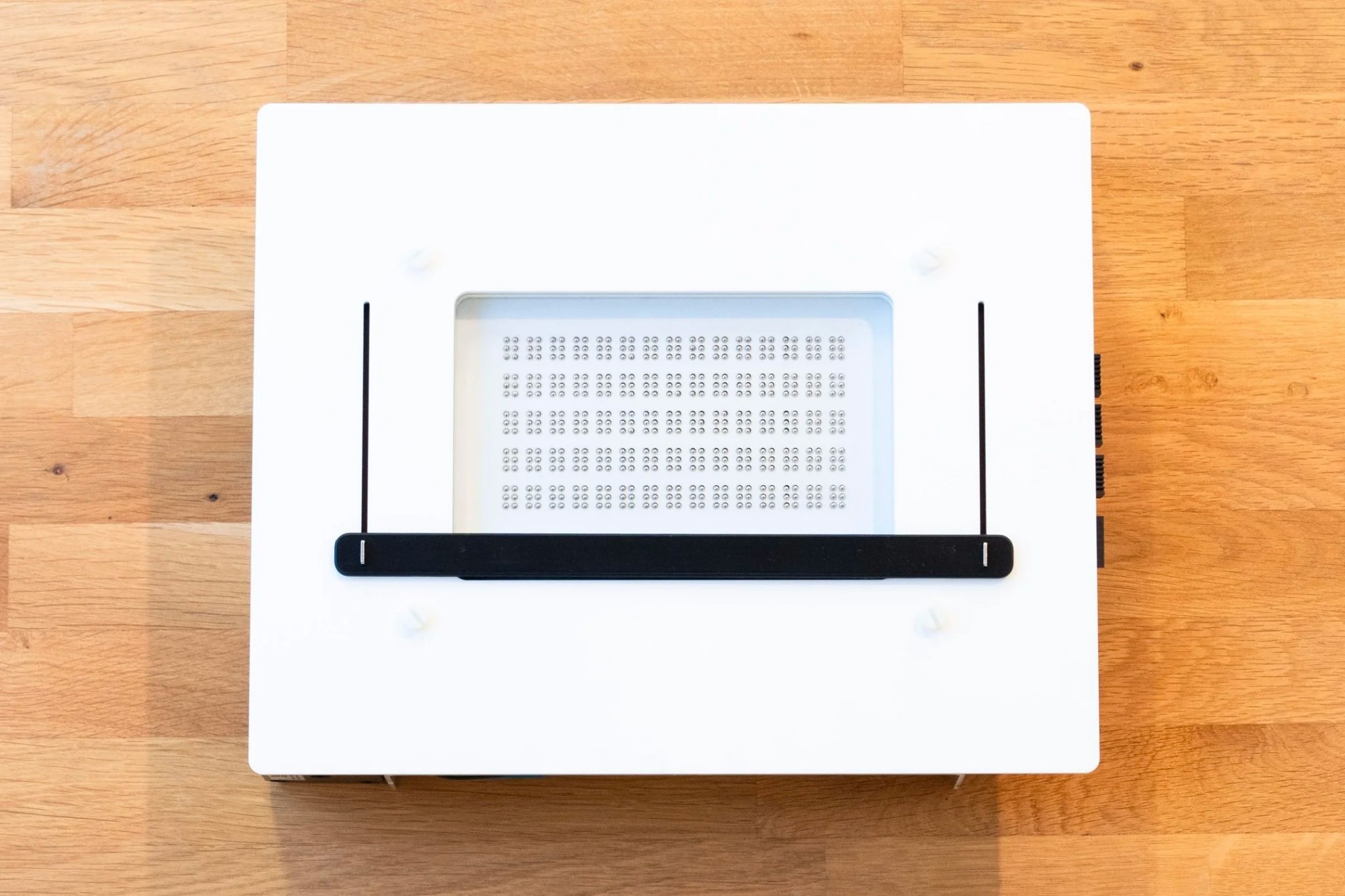
A multiline digital braille display device for low-resource environments, making assistive technology more accessible.
Overview
In 2019, a team of students from Imperial College London, supported by inaglobe, initiated the development of Paige, the world's first low-cost, multiline braille display. This innovation aims to make braille literacy more accessible and affordable worldwide.
Motivation & Stakeholders
With over 43 million people globally experiencing blindness and productivity losses from visual impairment exceeding £300 billion annually, the need for accessible braille technology is critical. Traditional braille displays are often prohibitively expensive and limited to a single line of text, restricting users' ability to engage with complex materials such as STEM content, music, tables, and graphs. A study by the Royal National Institute of Blind People (RNIB) found that 84% of braille users in the UK do not own a display, with 51% citing high costs as the primary barrier.
Stakeholders
The opportunity to address these challenges was identified during a field visit by inaglobe to the Kilimanjaro Blind Trust Africa mission in Kenya, highlighting the pressing need for affordable, multiline braille displays.
Innovation Cycle
Adopted into Imperial College's Biomedical Engineering Department in 2019, the Paige project was initially nurtured by a dedicated team of students. The device is designed to be used wirelessly with any device via a web app, facilitating reading, writing, graphing, and audio navigation. By reducing the number of components, the design significantly lowers the cost per character, making multiline braille more accessible. Prototype testing at a school for the visually impaired yielded positive feedback from accessibility specialists. Currently, to produce multiline braille, individuals use braillers to emboss paper. The Perkins Brailler, with 395,000 units sold worldwide, demonstrates the demand for multiline braille. The Kilimanjaro Blind Trust has distributed 950 braillers to support students across Africa. Since then, the original student team has evolved into Paige Braille Ltd, continuing to grow the project as an independent venture; you can learn more about the current team at Paige Braille.
Paige Connect
Building on the success of Paige, the team developed Paige Connect, an upgrade for traditional braille writers that enables wireless connectivity to phones, tablets, or laptops. This innovation allows for instant braille translation and gamified learning experiences. As of June 2025, Paige Connect became available in the U.S. through the American Printing House (APH) for $339.
Paige Connect attaches to the bottom of a traditional braille writer, replacing its base with a thin laminate board equipped with optical sensors. It connects to electronic devices via Bluetooth and is powered by a USB-A cord. The companion website offers braille lessons and games, enhancing the learning experience for new braille users.
Impact & Recognition
Paige's development has been supported by inaglobe, which identified the project during a field visit to the Kilimanjaro Blind Trust in Eastern Africa. In May 2022, Paige won the Mayor's Fund for London in the Social Enterprise Track and has raised over $75,000 in grants over two years. The Paige team's dedication to democratizing access to braille literacy continues to make significant strides in supporting the visually impaired community worldwide.
Project Images
Target Location
Eastern Africa, Kenya
Kilimanjaro Blind Trust Africa mission
Partners & Institutions
Academic Institution
Imperial College London - Department of Biomedical Engineering
Kilimanjaro Blind Trust Africa
Partner logos


Student Contributors

Gregory Hargraves
Co-founder
Imperial College London
Carolina Gomes
Co-founder
Imperial College London
Sergio Gosalvez
Co-founder
Imperial College London
Nina Moutonnet
Co-founder
Imperial College London
View Full Case Study
For more detailed information, visit the full case study on the original website.
View Paige case study