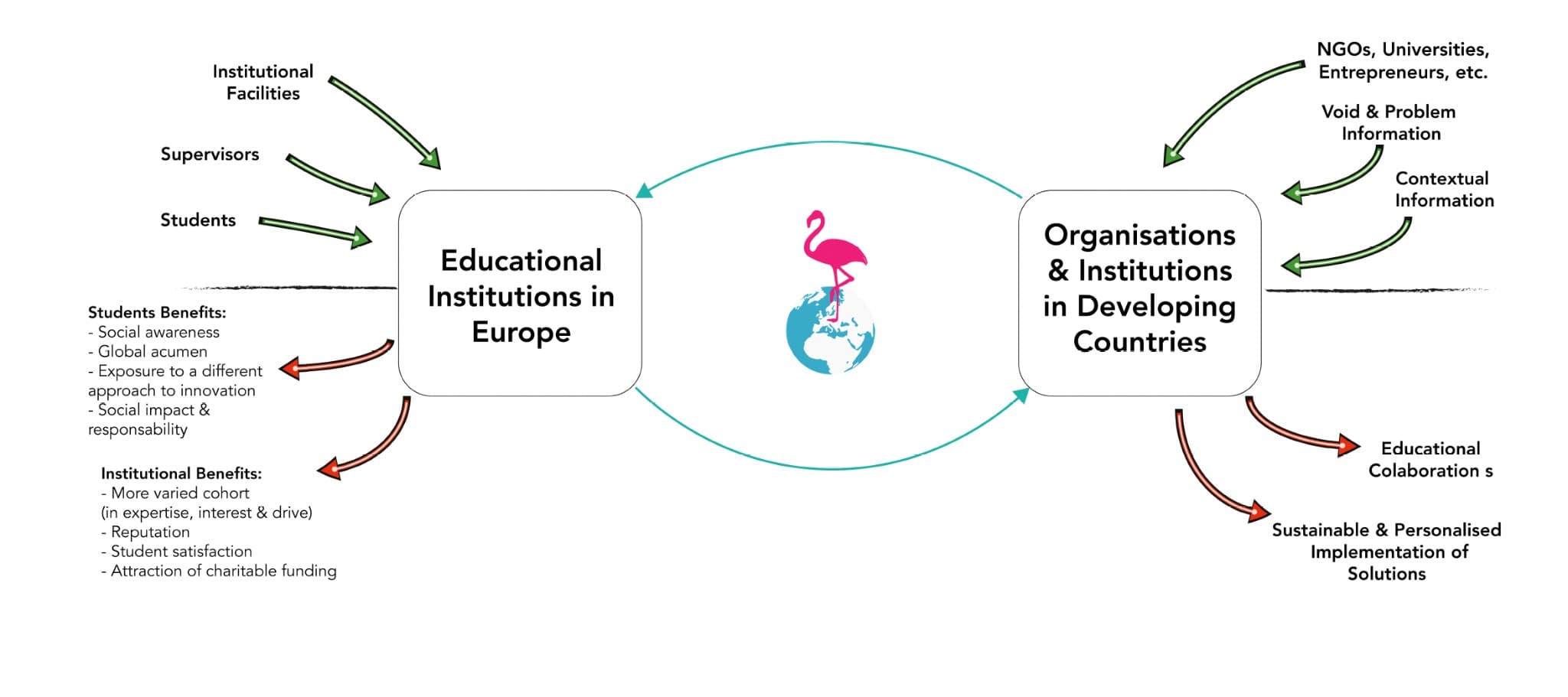
inaglobe systems strategy
How inaglobe leveraged existing infrastructure to provide experiential learning through curricular, project-based work.
inaglobe's approach
inaglobe's approach was to leverage existing educational and development infrastructure to provide experiential learning. This both meant intervening at the point of highest influence for university students (curricular, project-based learning), with the most representative, grassroots challenges identified by organisations directly witnessing them.
Young people and Purpose
University students are catapulted into their professional careers through the exposure and experiences they get. Young people are craving for purposeful and impactful work, and they often find themselves unable to conduct learning of that character at university. The university experience is often very theoretical and detached from real-world scenarios; and the experiential learning aspect is often grounded on what is immediately in the context, or simply is hypothetical.
Universities have an imperative to nurture young minds into growing more hungry for purpose, not the other way around. Every student is a changemaker opportunity. Graduates should be equipped to understand what is truly important for them personally and for society, and be active participants of that vision.
Training for future challenges
The future is here. The climate crisis is upon us, democracy is being challenged through polarisation of public opinion, and social media is presenting a mental health epidemic. The next generations of professionals will have outstandingly complex problems to solve, most of which systemic in nature and for which we do not have the appropriate global governance to address.
The skillsets that are being taught to these students often do not reflect the reality that is found in the professional space, and more so for these challenges I have described.
Globalisation and its challenges
The world is ever more connected, we can converse with people across the world in matters of seconds. Technology has meant that borders are but governance limits of how we organise fiscal, legal and civil systems, but they no longer limit collaboration as they used to. The internet and all the tools that are being built mean that engineers across the world can collaborate, and more importantly, professionals and people across domains can collaborate. Successful innovators of the future will know how to work alongside and interdisciplinary, international, diverse team of people and professionals.
The most ubiquitous technologies will not be ideated in a dark lab with highly controlled conditions, they will be born from the mix of cultures, ideas, backgrounds, experiences that they collective intelligence environments will create. We need to educate engineers in these methods such as to build their confidence and their ability to work effectively and respectfully.
The original inaglobe model still applies: