
inaglobe whitepaper
A long-form exploration of inaglobe's approach to teaching, collaboration, and social impact innovation across universities and grassroots partners.
Inaglobe: Challenging the innovation paradigm
Inaglobe stands as an ambitious initiative in the realm of innovation and engineering education. Drawing inspiration from impactful innovations like M-Pesa and the mobile technology boom in Africa, Inaglobe's mission was to empower a new generation of engineers and innovators. Its core philosophy revolved around fostering productive collaborations with beneficiaries in resource-constrained contexts to educate socially aware and globally conscious innovators and entrepreneurs.
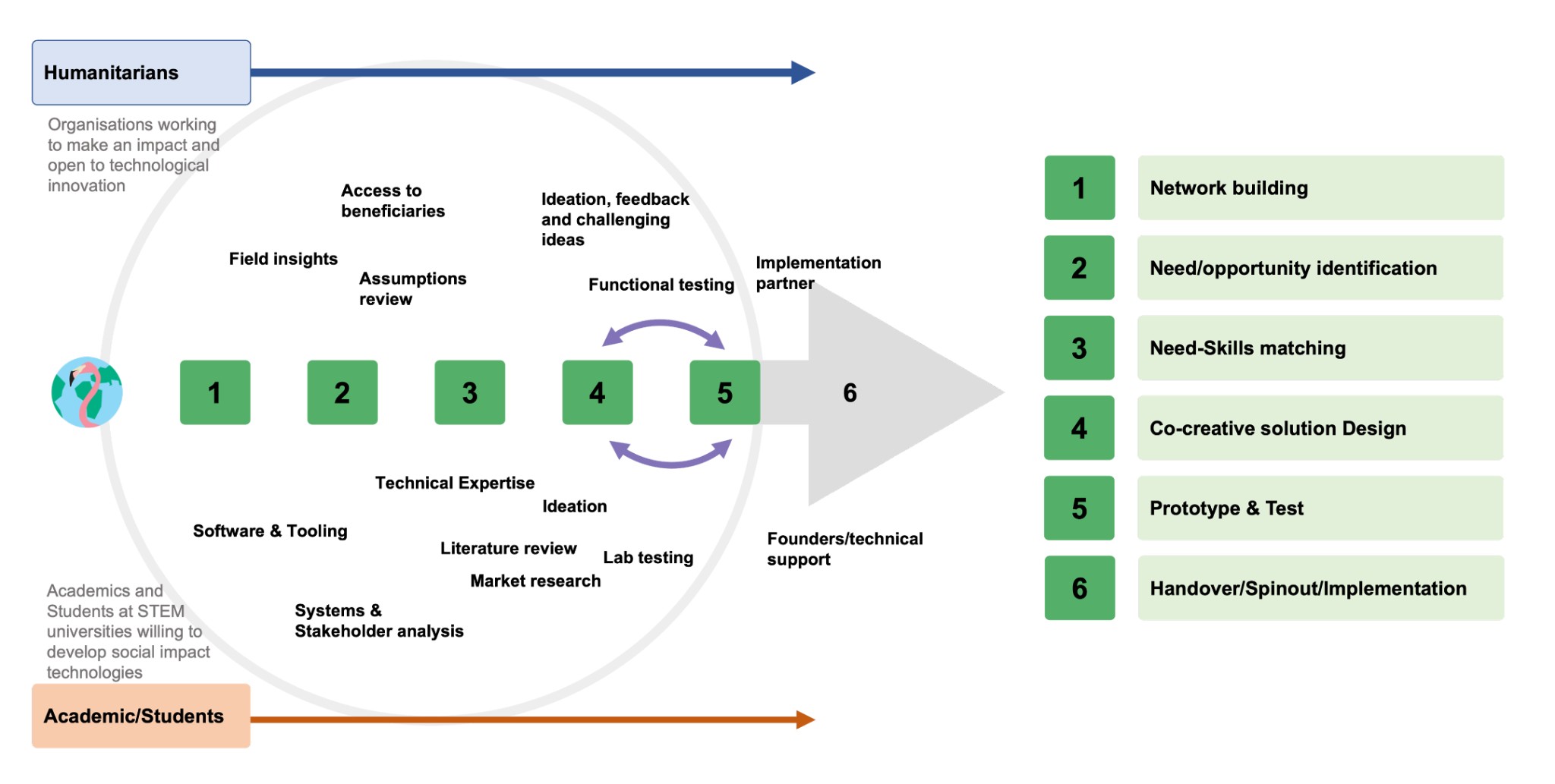
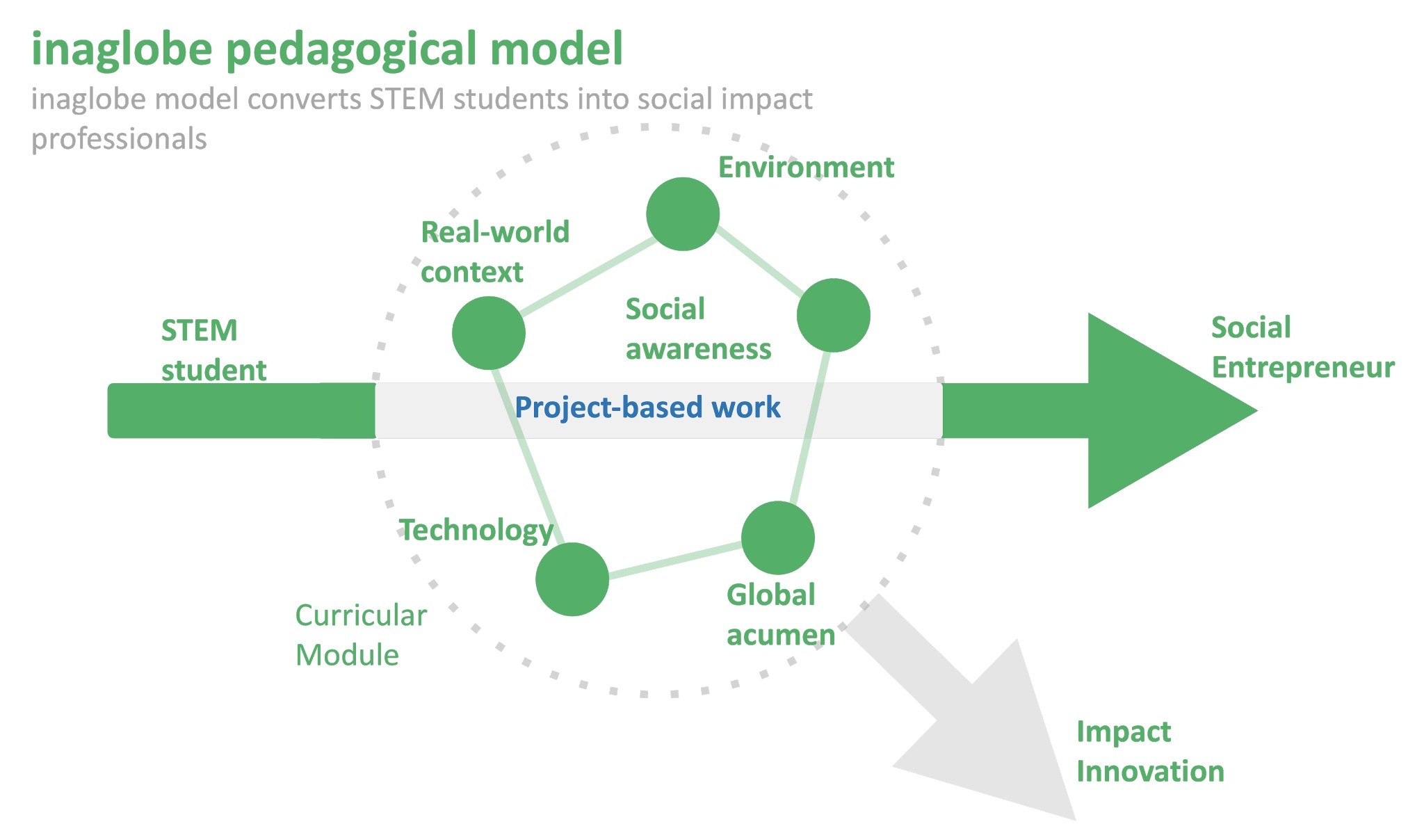
At the heart of Inaglobe's approach was its engagement with universities. Recognizing the formative stage of engineering students, Inaglobe integrated project-based learning into the curriculum. This method connected students with real-world problems sourced from grassroots initiatives, aligning academic pursuits with meaningful, real-world challenges.
Despite encountering challenges in achieving long-term financial sustainability, Inaglobe's nearly seven-year journey has been marked by significant achievements. The initiative successfully built a bridge between theoretical education and impactful, practical work, resonating with the aspirations of students seeking purposeful careers. This vision was embodied in projects like the Paige multiline digital braille display device, showcasing Inaglobe's commitment to practical, impactful learning.
We find ourselves amidst a tumultuous era marked by a confluence of formidable challenges: the escalating climate crisis, deepening political divides, and a burgeoning mental health crisis exacerbated by social media. Inaglobe's approach was conceived to prepare future innovators and leaders, providing them with the necessary exposure to complex real-world problems. This experience is designed to cultivate both the skills and the mindset required to navigate and address the intricate issues of our times. Recognizing the interconnectedness brought about by globalization, Inaglobe advocates for education that emphasizes collaboration across diverse cultures and disciplines.
In its years of operation, Inaglobe has left an indelible mark on engineering education, championing a model that blends academic rigor with real-world relevance. Its legacy is a testament to the power of innovative education in shaping future engineers and leaders equipped to tackle global challenges.
Purpose and Scope
The purpose of this white paper is to distill and disseminate the key learnings from Inaglobe.org's collaborative ventures with universities and students in the sphere of social innovation. It aims to provide insights into the efficacy of Inaglobe's model, the impact of its educational strategies, and the broader implications for social entrepreneurship and innovation education.
The scope of this document is delineated around three main topics, each reflecting a core aspect of Inaglobe's experience:
- Launching Social Impact Ventures: We delve into the distinctive challenges faced by initiatives that do not conform to conventional venture capital models or that begin without substantial initial capital.
- Inclusive and Sustainable Innovation: This section explores the imperative of reorienting design and innovation paradigms to embrace inclusivity and sustainability, underscoring the significance of these values in contemporary engineering and technological development.
- Real-World Skillsets for University Students: The paper highlights the crucial role of equipping students with practical skills through experiential learning, which prepares them to confidently and competently engage with the world's pressing challenges upon graduation.
By sharing Inaglobe's journey, this white paper celebrates the organization's existence and its contributions to the field, providing a reflective analysis that can serve as a guide for future endeavors in social innovation and educational reform.
Challenges in Launching Social Impact Ventures
The endeavor to initiate and sustain a social impact venture is fraught with challenges, particularly when such ventures are positioned outside the conventional contours of traditional venture capital (VC) models. Inaglobe's experience sheds light on this intricate landscape, where the aspirations of social innovation often grapple with the hard realities of funding and capital acquisition.
Standard VC Models vs. Social Ventures
Traditional VC models are designed to maximize financial returns in relatively short time horizons, often overlooking ventures where the primary return is social impact. This myopia can stifle innovation in sectors that are crucial for societal advancement. For instance, Inaglobe.org's commitment to creating collaborative technologies for resource-constrained contexts did not align neatly with the expectations of standard VCs, which prioritize scalability and profitability. The social ventures often require patient capital — investments that are willing to wait longer for financial returns, with a greater emphasis on the societal benefits.
Literature that explores the dichotomy between VC models and social ventures includes research by Mair and Marti (2006) who argue that social entrepreneurship requires a reconceptualization of value creation, one that transcends the financial dimension. Similarly, the work of Nicholls (2010) provides insights into how social enterprises often operate in markets that are not fully developed, requiring investors to take a different stance on risk and return.
Global social ventures often struggle to align with standard VC models due to their broad geographic focus and the complexity of measuring impact across different regions. Inaglobe.org's global aspirations encountered such issues, where the impact was distributed and not immediately quantifiable in financial terms. The work of Zahra et al. (2009) in the 'Academy of Management Journal' stresses that social enterprises operating on a global scale must navigate diverse market conditions and impact metrics, complicating the investment decisions for traditional VCs who favor localized, measurable outcomes.
Starting Capital Constraints
The initial capital is the lifeblood for any startup, yet for social ventures, securing this funding is often more challenging. Inaglobe.org faced this hurdle head-on, launching projects with minimal capital to create impactful technological solutions, often bootstrapping entirely. Inaglobe's project-based modules within universities were designed to operate on existing budgets, emphasizing ingenuity over expense. This constraint, although limiting, also fostered a culture of innovation driven by necessity, leading to creative solutions that were both cost-effective and socially impactful.
Case studies from the literature, such as the analysis by Kickul et al. (2012), illustrate how social entrepreneurs navigate these financial constraints through innovative funding strategies, including crowd-funding and community-based financing, which may also contribute to the social venture's legitimacy and community support. In the case of Inaglobe, the venture was entirely run by volunteer-based bootstrapping and minimal founder investment.
For global ventures like Inaglobe.org, initial capital constraints are magnified by the need to operate across various international contexts, each with its own regulatory and economic challenges. The case of microfinance institutions, as discussed by Battilana and Dorado (2010) in 'Organization Science,' shows that social ventures with a global reach must often engage in institution-building activities that require significant upfront investment, further straining their limited resources. Inaglobe was no exception to that pressure.
External References and Contextualizing Inaglobe's Learnings
The journey of Inaglobe, while marked by commendable achievements, also highlights the critical need for a supportive ecosystem for social ventures. Industry reports, like those from the Global Impact Investing Network (GIIN), underscore the potential for impact investing to fill the gaps left by traditional VC funding. Academic journals, such as the Journal of Social Entrepreneurship, further elaborate on alternative models of financing that align more closely with the objectives and operational realities of social ventures.
The challenges Inaglobe faced in securing sustainable funding reflect a broader systemic issue within the landscape of social entrepreneurship. The project's experience underscores the importance of developing new financing models that are attuned to the unique demands of social impact ventures — models that value social returns on investment and the long-term benefits to society. It is reflective of the broader phenomenon where global social ventures face heightened challenges in securing funding. The 'Stanford Social Innovation Review' highlights that global ventures must often rely on a patchwork of funding sources, including international grants and partnerships, which can be unpredictable and inconsistent (Dacin et al., 2010). Moreover, as noted in the 'Journal of Business Ethics' by Seelos and Mair (2005), ventures aiming for a global impact must balance scalability with adaptability, ensuring that their solutions are culturally sensitive and contextually appropriate.
The literature clearly indicates that global social impact ventures experience compounded difficulties in comparison to localized projects. These ventures must reconcile the need for widespread impact with the realities of disparate market conditions and complex funding landscapes. Inaglobe's story is testament to this.
Shifting towards Inclusive and Sustainable Innovation
Current Innovation Paradigms and Limitations
The prevailing paradigms in technology innovation have long been driven by a market-centric approach, prioritizing products and solutions that promise high returns and scalability. This approach, while successful in driving economic growth, often neglects the needs and contexts of marginalised communities and the environment (or anything not explicitly considered economically). The limitations of this paradigm are becoming increasingly apparent, as noted by scholars like George et al. (2012) in their work on innovation for inclusive growth. They argue that the current paradigms fail to address significant social and environmental challenges, leaving behind a sizable portion of the global population and contributing to ecological degradation.
Inaglobe's Approach to Inclusivity and Sustainability
Inaglobe.org has charted a different course by placing inclusivity and sustainability at the heart of its innovation projects. One of the organization's hallmark initiatives, the collaborative development of the Paige multiline digital braille display device, demonstrates this commitment. The project not only aimed to provide an affordable assistive technology for visually impaired individuals but also considered the environmental impact of the device's production and lifecycle. By involving end-users and stakeholders from the outset, Inaglobe.org ensured that the solutions were not only technologically sound but also socially and environmentally responsible.
The Importance of This Shift
The global need for a shift toward sustainable and inclusive innovation practices is underscored by several external sources. The United Nations' Sustainable Development Goals (SDGs) serve as a clarion call for innovations that address the pressing challenges of our time, ranging from poverty to climate change. Reports from the World Economic Forum echo this sentiment, outlining the urgent need for innovations that are accessible to all layers of society and that contribute to a sustainable future.
Additionally, initiatives like the frugal innovation movement, discussed in Radjou and Prabhu's work on 'Jugaad Innovation,' highlight the power of resource-constrained innovation to create affordable and sustainable solutions that serve the needs of the many, not just the few.
Inaglobe.org's practices align with these global calls to action, providing a blueprint for how technology innovation can be steered in a more equitable and environmentally friendly direction. By focusing on projects that prioritize social and ecological considerations, Inaglobe.org contributes to a growing movement that redefines success in innovation, not just by financial measures, but by the positive impact on society and the planet.
The urgency for global collaboration in fostering inclusive and sustainable innovation is at a critical juncture; we must unite to ensure that progress equitably benefits all corners of society and respects the finite resources of our planet. It is time to act decisively, channeling our collective energies and resources to shape a future where technology serves as a bridge to opportunity and a steward of the earth's well-being.
Empowering a new generation of innovators
Skills Gap and Inaglobe
The divide between the academic knowledge imparted by university curricula and the practical skills demanded by today's workforce is a growing concern in higher education. Traditional educational models often emphasize theoretical frameworks, leaving graduates unprepared for the practical challenges they face in their professional lives. This gap is highlighted in research by Binks et al. (2006), who argue that while universities excel at developing analytical abilities, they fall short in providing the hands-on experience that is crucial for workplace readiness.
Inaglobe.org has actively addressed this disconnect by embedding real-world project-based learning into its curriculum. Through its innovative educational model, students are immersed in actual social innovation projects, bridging the gap between theory and practice. Testimonials from participants affirm the transformative effect of this approach, with many alumni attributing their career successes to the competencies and confidence they gained from Inaglobe.org's projects.
Long-term Benefits
The long-term benefits of practical training are substantiated by a breadth of studies. A survey by the National Association of Colleges and Employers (NACE) found that graduates with experiential learning backgrounds command higher starting salaries and are more likely to receive job offers than their peers without such experience. Further, a study by Lichtenstein et al. (2019) in the 'Journal of Experiential Education' provides evidence that project-based learning enhances long-term career outcomes by fostering critical thinking, adaptability, and collaborative skills.
By equipping students with the hands-on skills required in today's dynamic and complex professional landscape, initiatives like Inaglobe.org play a critical role in shaping the innovators and leaders of tomorrow. The incorporation of practical skills training into university education is not just beneficial but essential for preparing students to navigate and succeed in the rapidly evolving workforce.
Addressing Educational Inertia: The Need for Agility and Dynamism
The higher education sector is often criticized for its lack of agility and reluctance to innovate, especially within well-established universities that boast significant resources and prestigious reputations. These institutions, anchored by their historical pedagogical approaches and conventional curricula, may not feel the pressing need to adapt to the changing educational landscape. This inertia within higher education can be attributed to a variety of factors, including bureaucratic constraints, the slow pace of curricular reform, and the risk-averse nature of academia. As a result, these universities may fail to provide students with the dynamic and interdisciplinary learning experiences required for the modern workforce and global challenges.
New educational models, such as those proposed by the London Interdisciplinary School (LIS) and the School of Innovation, stand at the vanguard of educational reform. These institutions are built on the premise that learning should be cross-disciplinary, problem-based, and deeply integrated with the real world. The LIS, for instance, offers a curriculum that crosses traditional subject boundaries and focuses on tackling complex global challenges. Similarly, the School of Innovation prioritizes a curriculum that fosters creativity, entrepreneurship, and critical thinking skills. Such institutions represent a disruptive force in the higher education ecosystem, challenging the status quo and offering a blueprint for how universities can evolve to meet the needs of today's society.
Bridging the Skills Gap Through Innovative Education
Inaglobe.org's response to the traditional educational model's shortfall has been to implement a teaching approach that mirrors the dynamism of the rapidly changing global job market. By collaborating with institutions and integrating real-world challenges into the curriculum, Inaglobe.org has demonstrated the value of a more responsive and hands-on educational experience. The success stories from Inaglobe.org's alumni, who have transitioned seamlessly into impactful careers, underscore the effectiveness of this approach in equipping students with the practical skills and adaptive mindsets needed for today's complex problems.
The contrast between the entrenched methods of traditional universities and the forward-thinking approaches of new educational ventures highlights a growing divide. It emphasizes the urgency for established institutions to reassess and rejuvenate their teaching methodologies. As higher education stands on the precipice of change, it is initiatives like Inaglobe.org, the London Interdisciplinary School, and the School of Innovation that are lighting the way, demonstrating that the universities of the future must be agile, interdisciplinary, and deeply connected to the practicalities of the world outside their lecture halls.
Conclusion
In conclusion, the imperative for a profound recalibration of design and innovation principles is undeniable. Our rapidly evolving global landscape demands that we not only reconceptualize these principles but also fervently adopt practices that prioritize sustainability and inclusivity. The education of the next generation stands at the heart of this transformation—where fostering a curriculum that champions collaborative and global engagement is no longer a luxury but a necessity. Moreover, we must diligently construct and refine systems that robustly support and finance disruptive social impact ventures, recognizing that the challenges of our time require not just new solutions, but a new ethos of innovation itself. Such systemic change will catalyze the emergence of ventures equipped to confront complex social issues, thereby empowering a generation of innovators who are as globally conscious as they are capable. It is through these concerted efforts that we will build a future where innovation serves as a cornerstone for a resilient and equitable society.